
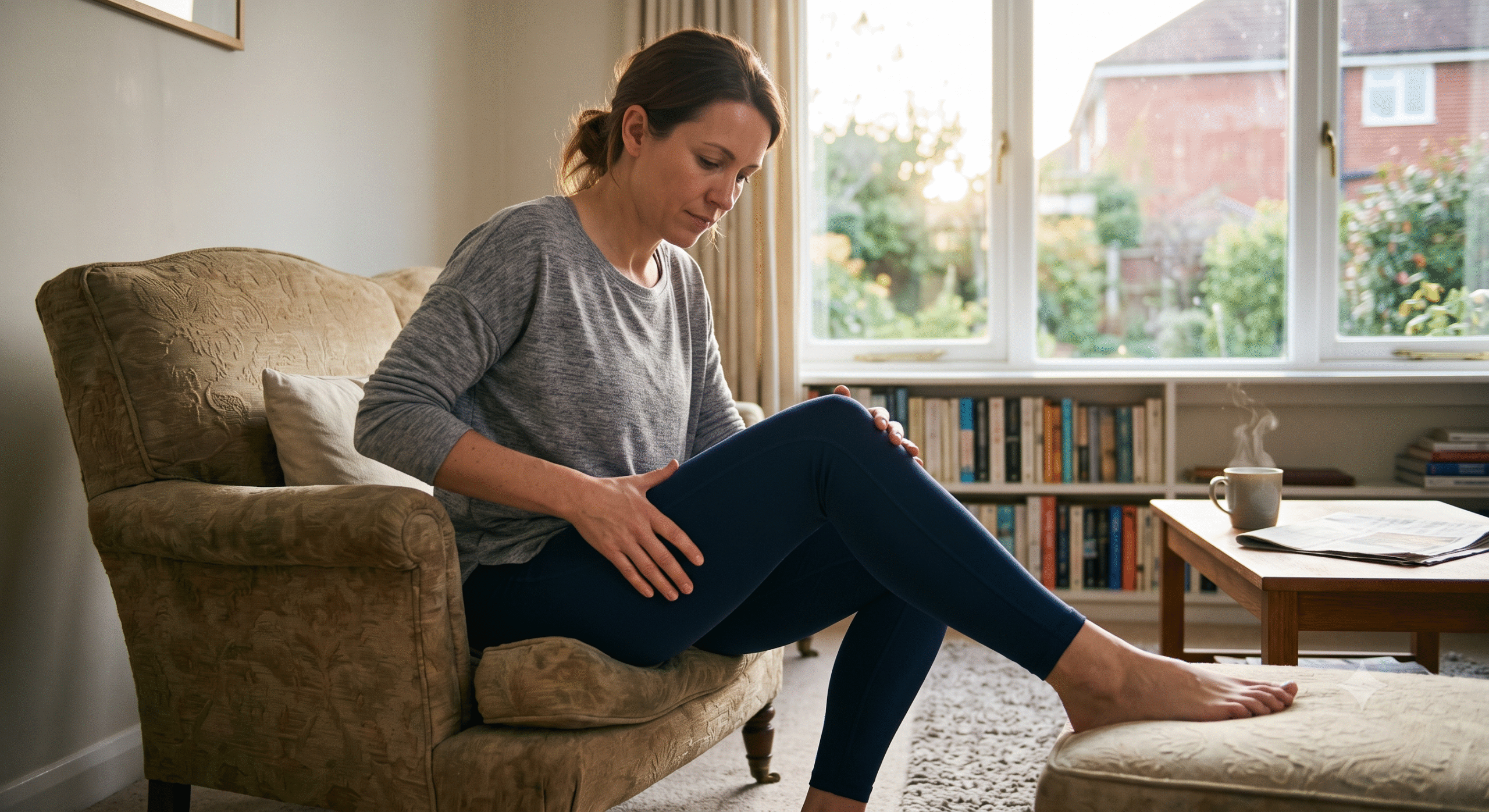
Leg pain can often be referred from issues in your lower back, hip, or pelvis.
Leg pain can make it difficult to walk, work, exercise, or even sleep comfortably. While many people assume the pain is coming directly from the leg, the true source may actually be the lower back, hip, pelvis, or knee. Identifying the underlying cause is the key to lasting relief.
At Brookswood Plus Physiotherapy, we proudly help patients throughout Brookswood, Fern Ridge, Murrayville, Willowbrook, Campbell Valley, and Langley recover from leg pain using evidence-based physiotherapy. Whether your symptoms are caused by sciatica, a herniated disc, hip dysfunction, knee arthritis, or a workplace or ICBC injury, our experienced physiotherapists provide personalized treatment plans designed to restore movement and reduce pain.
Why Does Leg Pain Travel?
The nerves that supply your legs originate in your lower back. Your hips, pelvis, knees, muscles, tendons, and joints all work together when you walk or move.
Because of this interconnected kinetic chain:
-
Lower back injuries can compress nerves and send shooting pain down the leg.
-
Hip problems frequently refer pain directly to the knee.
-
Knee injuries can alter your walking mechanics, eventually leading to secondary hip or back pain.
-
Tight muscles or irritated nerves can cause local pain that travels into the calf or foot.
Note: Treating only the painful area without identifying the true biological source of the issue may temporarily mask symptoms and delay your overall recovery.
Common Triggers of Leg Pain
🚗 1. ICBC Car Accidents
Motor vehicle collisions commonly cause sudden impact injuries affecting the lower back, hips, pelvis, and knees. Even low-speed collisions can result in persistent pain if not treated early. Common accident-related conditions include:
-
Sciatica & nerve irritation
-
Lumbar disc injuries & sacroiliac (SI) joint dysfunction
-
Muscle strains & soft tissue injuries
-
Knee ligament sprains & hip joint injuries
🏋️ 2. Heavy Lifting
Repeated heavy lifting at work, the gym, or home can overload the lower back and hips. Proper lifting mechanics and targeted physical rehabilitation are essential to prevent recurrence of:
-
Lumbar disc herniation
-
Sciatica
-
Muscle strains & hip tendon injuries
-
Sacroiliac joint dysfunction
🔨 3. Work & Repetitive Strain Injuries
Many occupations place repetitive, daily stress on the lower body. Work-related injuries respond exceptionally well to early physiotherapy intervention. We commonly treat:
-
Construction workers & tradespeople
-
Warehouse employees & delivery drivers
-
Healthcare professionals
-
Landscapers
-
Office workers who sit for prolonged periods
🪑 4. Poor Posture & Ergonomics
Poor posture is one of the most overlooked causes of lower back and leg pain. Extended sitting, poor workstation setups, weak core muscles, tight hip flexors, and a sedentary lifestyle eventually contribute to nerve irritation and muscle imbalances.
Leg Pain Symptoms: What Are You Feeling?
Leg pain is rarely just a dull ache. Depending on the root cause, you may experience:
-
Referred Pain: Pain in the buttock, hip, groin, thigh, knee, calf, or foot.
-
Nerve Sensations: Burning, tingling, “pins and needles”, or numbness.
-
Physical Deficits: Muscle weakness, difficulty walking, or pain when sitting/standing.
-
Functional Limits: Difficulty climbing stairs or bending over.
Is It Sciatica?
Sciatica is not a standalone diagnosis, but rather a symptom of an underlying issue. It occurs when the sciatic nerve—the longest nerve in your body—is irritated or compressed at its root in the lower back.
Key Symptoms of Sciatica:
-
Pain that begins in the lower back or buttock and travels down the back of the leg
-
Sharp, electric, or burning pain sensations
-
Tingling, numbness, or muscle weakness in the leg or foot
-
Increased discomfort when sitting for long periods
Differential Diagnosis: What Could Be Causing Your Leg Pain?
Because different structures refer pain to similar areas, a detailed physiotherapy assessment is essential to distinguish between conditions that mimic one another.
Physiotherapy Treatment for Leg Pain at Brookswood Plus
At Brookswood Plus Physiotherapy, we do not believe in a one-size-fits-all approach. Your treatment is entirely customized to your unique diagnosis, lifestyle, and recovery goals.
🔍 1. Comprehensive Assessment
Before treatment, your physiotherapist evaluates your lumbar spine mobility, hip and knee mechanics, muscle strength, neural mobility, walking patterns, and overall functional movement.
👐 2. Manual Therapy
Hands-on joint mobilization and soft tissue release techniques help to improve joint mobility, reduce stiffness, restore natural movement, and decrease local muscle tension.
📍 3. Dry Needling
By targeting deep neuromuscular trigger points, dry needling helps release tight muscles, improve localized blood flow, and relieve referred nerve tension.
🔮 4. Cupping Therapy
Using gentle suction, cupping therapy increases circulation to stagnant tissues, reduces myofascial tightness, and encourages faster recovery.
⚡ 5. Cold Laser Therapy
Using low-level light energy, cold laser therapy works at a cellular level to reduce deep tissue inflammation, alleviate acute pain, and accelerate soft tissue healing.
👟 6. Exercise Rehabilitation
Long-term relief depends on active recovery. Your tailored program may include:
-
Core and hip stabilization exercises
-
Glute and functional leg strengthening
-
Sciatic nerve gliding exercises
-
Gait (walking) retraining & postural correction
Tips to Prevent Future Leg Pain
You can proactively reduce your risk of recurrent lower body injuries by adopting a few healthy daily habits:
-
Maintain Good Posture: Keep your spine neutral while sitting and standing.
-
Stay Active: Incorporate consistent, low-impact movements throughout the week.
-
Strengthen Your Core & Hips: A strong foundation protects your back and lower joints.
-
Use Proper Lifting Techniques: Bend at your knees and hips, keeping loads close to your body.
-
Take Movement Breaks: If you work a desk job, stand up and stretch every 45 to 60 minutes.
Why Choose Brookswood Plus Physiotherapy?
Located in the heart of Brookswood, we proudly serve patients from Fern Ridge, Murrayville, Willowbrook, Campbell Valley, South Langley, and surrounding communities.
-
One-on-One Care: Receive dedicated, uninterrupted time with your physiotherapist.
-
Direct Billing: We offer hassle-free direct billing to most major private insurance providers.
-
ICBC & WorkSafeBC Claims: Complete rehabilitation support for accident and workplace injury claims.
-
Diverse Treatments: Access to advanced modalities like dry needling, cold laser, and cupping in one clinic.
Frequently Asked Questions
Can leg pain come from my lower back?
Yes. Spinal issues like lumbar disc herniations, sciatica, and spinal stenosis commonly refer pain, numbness, or tingling down into the buttock, thigh, calf, or foot.
Can hip problems feel like knee pain?
Absolutely. Hip arthritis, muscle weakness, and joint dysfunction frequently refer pain down the thigh to the knee, which is why a comprehensive structural assessment is crucial.
How do I know if I have sciatica?
Sciatica typically causes a distinct pain that starts in the lower back or glute and travels down the back of the leg. However, because other lower back and hip issues present similarly, a clinical physiotherapy assessment is highly recommended for an accurate diagnosis.
Does dry needling help leg pain?
Yes. If muscle tightness or active trigger points are compressing nerves or causing referred leg pain, dry needling is highly effective at releasing those tight structures and relieving symptoms.
Can cupping therapy help with sciatica?
Cupping therapy can help reduce myofascial tension in the lower back and gluteal muscles. While it doesn’t cure the underlying spinal compression, it is excellent for relieving painful muscular tension associated with sciatica.
Should I see a physiotherapist after an ICBC accident?
Yes. Seeking a professional assessment early after a motor vehicle accident prevents acute tissue damage and minor spinal issues from developing into chronic leg and back pain.
Book Your Physiotherapy Assessment Today
If you are experiencing leg pain, sciatica, hip pain, knee pain, or lower back pain in Brookswood, Fern Ridge, or Langley, don’t wait for symptoms to become chronic.
At Brookswood Plus Physiotherapy, we provide evidence-based treatments to help you move better, recover fully, and get back to the activities you love.
👉 [Click Here to Book Your Appointment Online] or call our clinic today to speak with our team!

0 Comments