When Should You See a Physiotherapist for Back Pain? 5 Warning Signs
Back pain has become a common problem nowadays. Sitting for long hours, wrong posture, less physical activity, muscle strain, sports injury and age-related changes can be common causes. Rest, correct posture and regular physical activity can sometimes relieve mild back pain but if the pain is persistent or starts to impede daily activities then it may be advisable to see a physiotherapist.
If you live in Langley or Brookswood and are experiencing persistent back pain, a physiotherapy assessment at Brookswood Plus Physiotherapy can help you understand the likely cause of your pain and create an appropriate rehabilitation plan for you.
In this blog, we know when to see a physiotherapist for back pain and which are the 5 warning signs you should not ignore.
What are the common causes of back pain?
Back pain can be caused by many different reasons. Some common causes are:
- Sitting or standing for a long time
- Incorrect sitting posture
- Sudden heavy lifting
- Muscle strain or ligament injury
- Sports injury
- Reduced physical activity
- Weakness of core muscles
- Sciatica or nerve irritation
- Spinal changes that occur with age
- Chronic injury problems
The cause of back pain can be different from person to person. Therefore, professional assessment can be useful in persistent or recurrent pain.
When to see a physiotherapist for back pain?
Not every back pain requires physiotherapy. However, if the pain recurs, lasts for a long period or limits your movement, you may consider having assessed by a physio therapist.
Here are warning signs to watch out for.
1. Back pain is persistent
2. Pain is affecting your everyday activities
3. Back pain with pain or tingling in the leg
4. Back Pain Affecting Your Sleep
5. Mobility has decreased in getting up, sitting or walking
How can physiotherapy help with back pain?
Physiotherapy for back pain is not just aimed at reducing pain. The Physiotherapy treatment may also target to improve body movement, strength, and flexibility to ease body function in daily life.
Your treatment approach can involve:
1. Physical assessment
At the very first step, a physiotherapist checks your medical history, symptoms, posture, mobility and strength.
2. Therapeutic Exercise
Exercises to target weak muscles and target to improve your mobility.
3. Manual Therapy
In some patients, appropriate manual therapy techniques can be useful in managing stiffness and movement restrictions.
4. Posture and Ergonomic Advice
If your work is associated with sitting at a desk for long periods of time, changes in posture and workstation setup can be part of back pain management.
5. Core Strengthening
The core muscles are vital in providing stability to the body. Customized strengthening exercises can help you with mobility and your ability to do things.
6. Home Exercise Program
Performing prescribed exercises correctly even outside the clinic can be crucial for the success of physiotherapy. Your physiotherapist can offer a home exercise program according to your condition.
Is physiotherapy necessary for every back pain?
No. for Mild cases, it may improve over the time with changes in exercise and self-care. But physiotherapy examination can be useful for persistent, recurrent or function limiting back pain. If the pain is getting worse quickly, or if it is accompanied by other worrying symptoms, you may need to be seen by a medical professional.
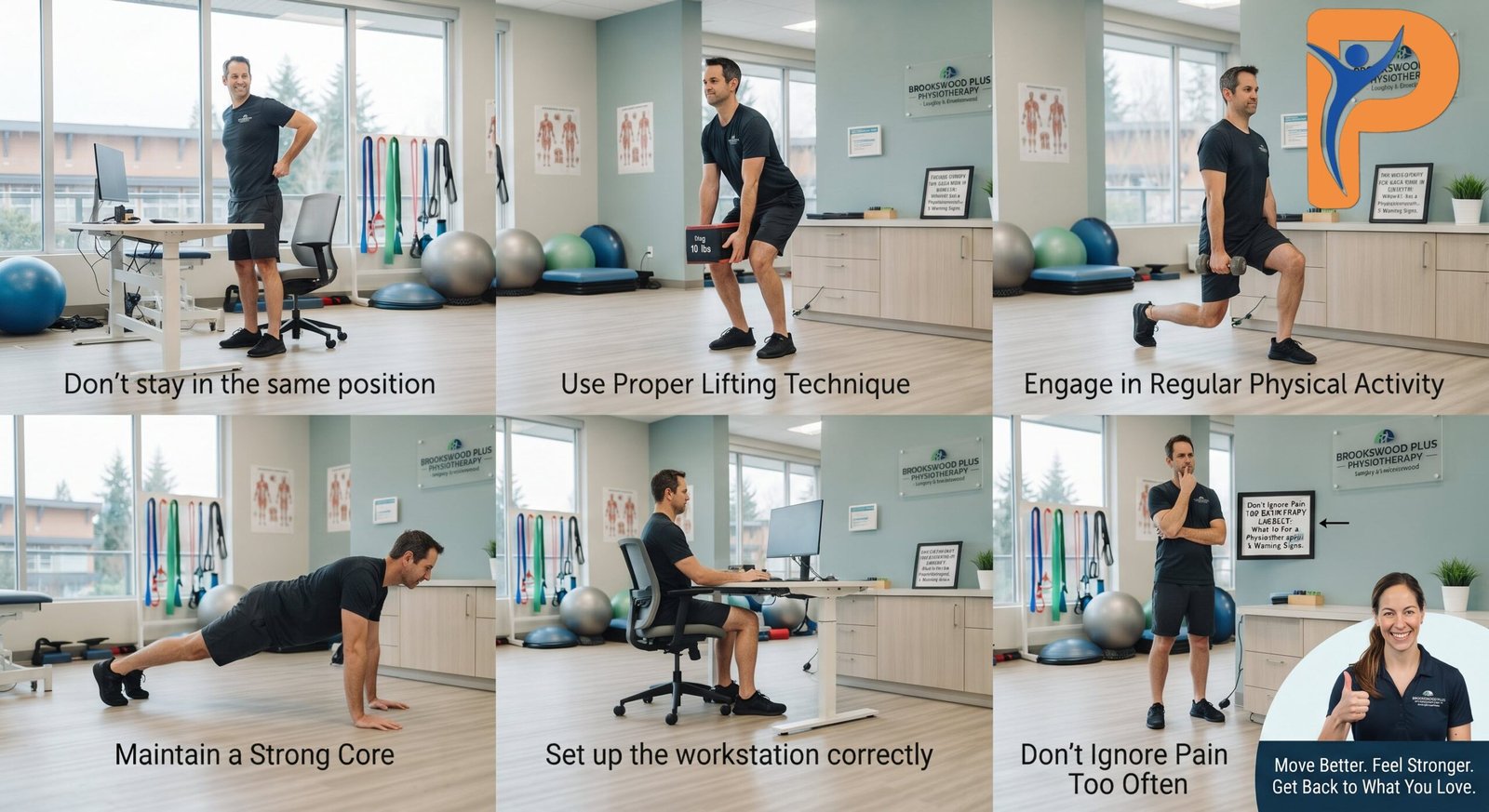
6 Easy Ways to Avoid Back Pain
It is not always possible to completely prevent back pain, but healthy movement habits can help.
1. Don’t stay in the same position for long time
Get up or change your position in every 15-20 minutes interval, move around and walk frequently.
2. Use Proper Lifting Technique
At the time of lifting big or heavy objects, be careful of your body position and how you lift.
3. Engage in Regular Physical Activity
Add regular physical activity in your routine like walking, strengthening, and mobility workouts.
4. Maintain a Strong Core and Lower Body
Keep Core and Lower Body Strong, strong core muscles can help you to ease daily activities and movement.
5. Set up the workstation correctly
If you do a desk job, keep the chair, monitor, and desk height in a comfortable position.
6. Don't Ignore Pain Too Often
Frequent back pain can be a sign to your body that an assessment of movement, strength, or activity habits is necessary.
Physiotherapy for Back Pain in Brookswood and Langley
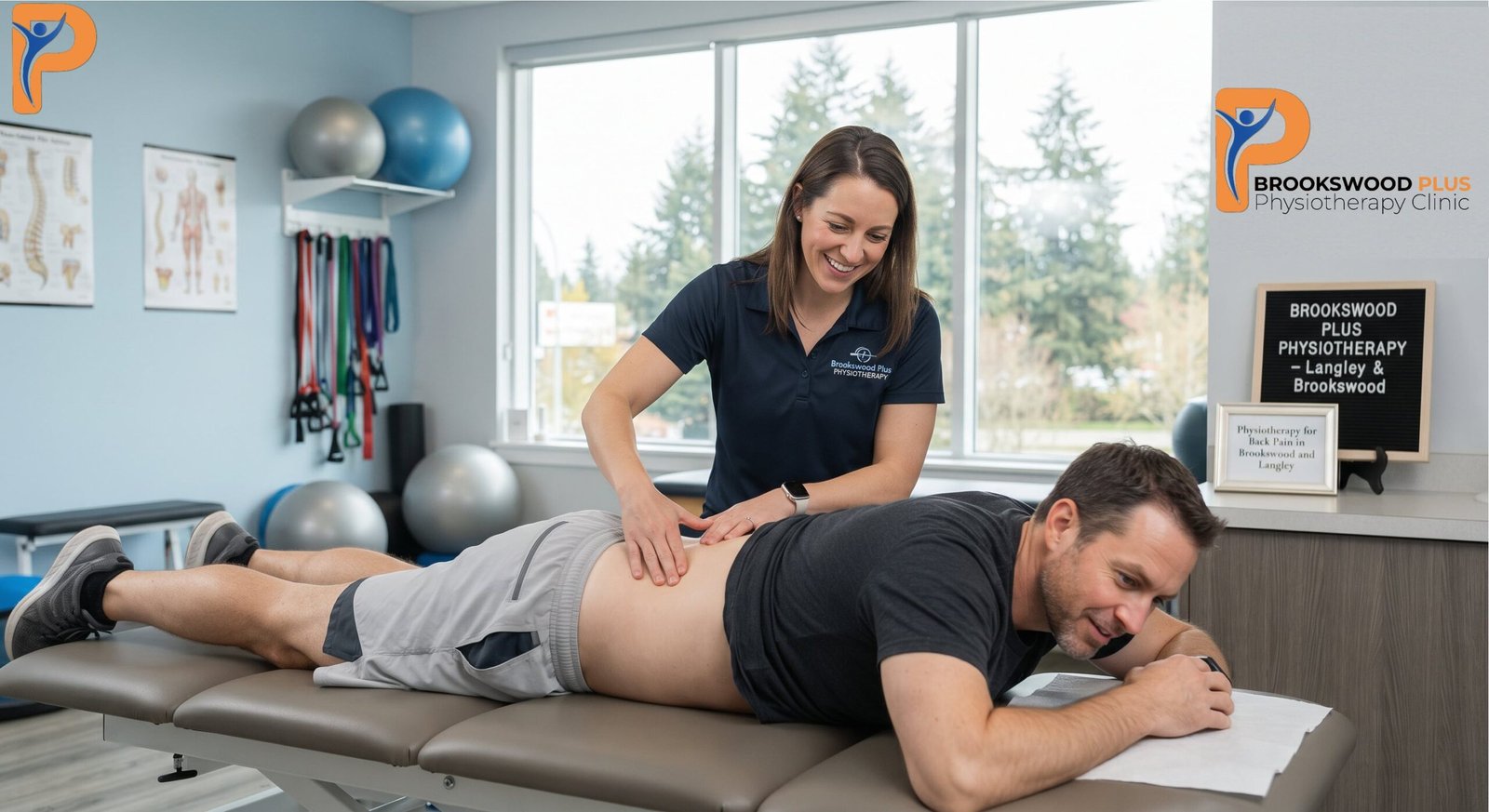
If you are looking for back pain physiotherapy in Langley or physiotherapy for back pain in Brookswood, you can find information about the assessment and individualized rehabilitation approach at Brookswood Plus Physiotherapy.
The purpose of physiotherapy may be to help you move towards better movement, strength, and function, so that you can return to your daily activities and favorite physical activities with more confidence.
Frequently Asked Questions (FAQs)
Can Physiotherapy Help with Lower Back Pain?
Yes, physiotherapy management can be useful in many types of lower back pain. Treatment is individualized based on your symptoms, mobility, strength, and functional goals.
How many physiotherapy sessions are needed for back pain?
Physiotherapy sessions depend on many factors depends on person's condition, symptoms, and recovery goals. Following the assessment, physiotherapist can discuss and guide you the best suitable treatment plan for you.
Is MRI necessary for back pain?
MRI is not necessary in every back pain case. MRI for back pain depends upon the symptoms and physiotherapist assesment. Your health care expert will decide if imaging is needed.
Can physiotherapy help with back pain without surgery?
Every time Surgery not needed for backpain treatment, back pain can be treated with conservative care, exercise, and physiotherapy after physiotherapist assessment. But treatment depends on your specific diagnosis and symptoms.
Conclusion
Back pain is not always to be ignored. If the pain is persistent, limited in your mobility, and affecting daily activities, or the pain, discomfort is radiating to the foot, it may wise to seek a professional evaluation.
Back pain management, mobility, and functional recovery can be worked on through a personalized assessment and rehabilitation approach in Brookswood Plus Physiotherapy.
If you are looking for physiotherapy for back pain in Langley or back pain physiotherapy in Brookswood, find out more about the services of Brookswood Plus Physiotherapy.

0 Comments