Musculoskeletal Physiotherapy in Langley: Conditions We Treat
Musculoskeletal conditions affect your bones, joints, muscles, tendons and ligaments, and they are the most common reason people see a physiotherapist. At Brookswood Plus Physiotherapy in Langley, our physiotherapists assess how you move, find what is driving your pain and build a plan to get you moving again.
Tap the body chart to find your area of concern. You can book directly. No doctor's referral is needed.
Where does it hurt? Tap a number.
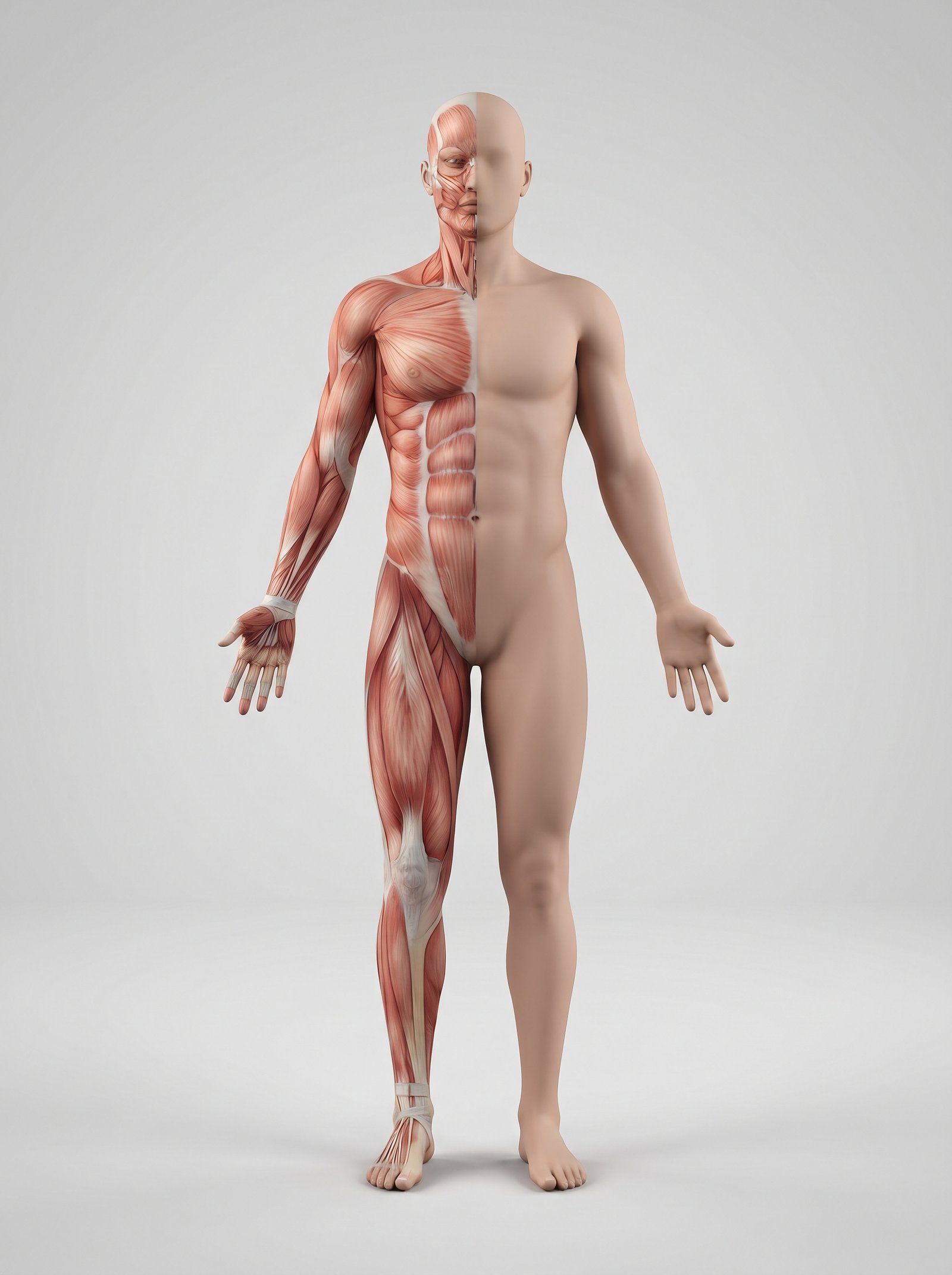
What are musculoskeletal conditions?
Almost everyone has a musculoskeletal problem at some point, from a stiff neck to a sore knee.
The musculoskeletal system is the framework of bones, joints, muscles, tendons, ligaments and related tissues that supports your body and lets you move. Musculoskeletal conditions are injuries and long-term problems of these tissues, from a sudden sprain to gradual joint wear.
They can follow a fall, a car accident, a sports injury, repetitive work or the years. Some settle in a few weeks, and others need a longer plan built around your goals.
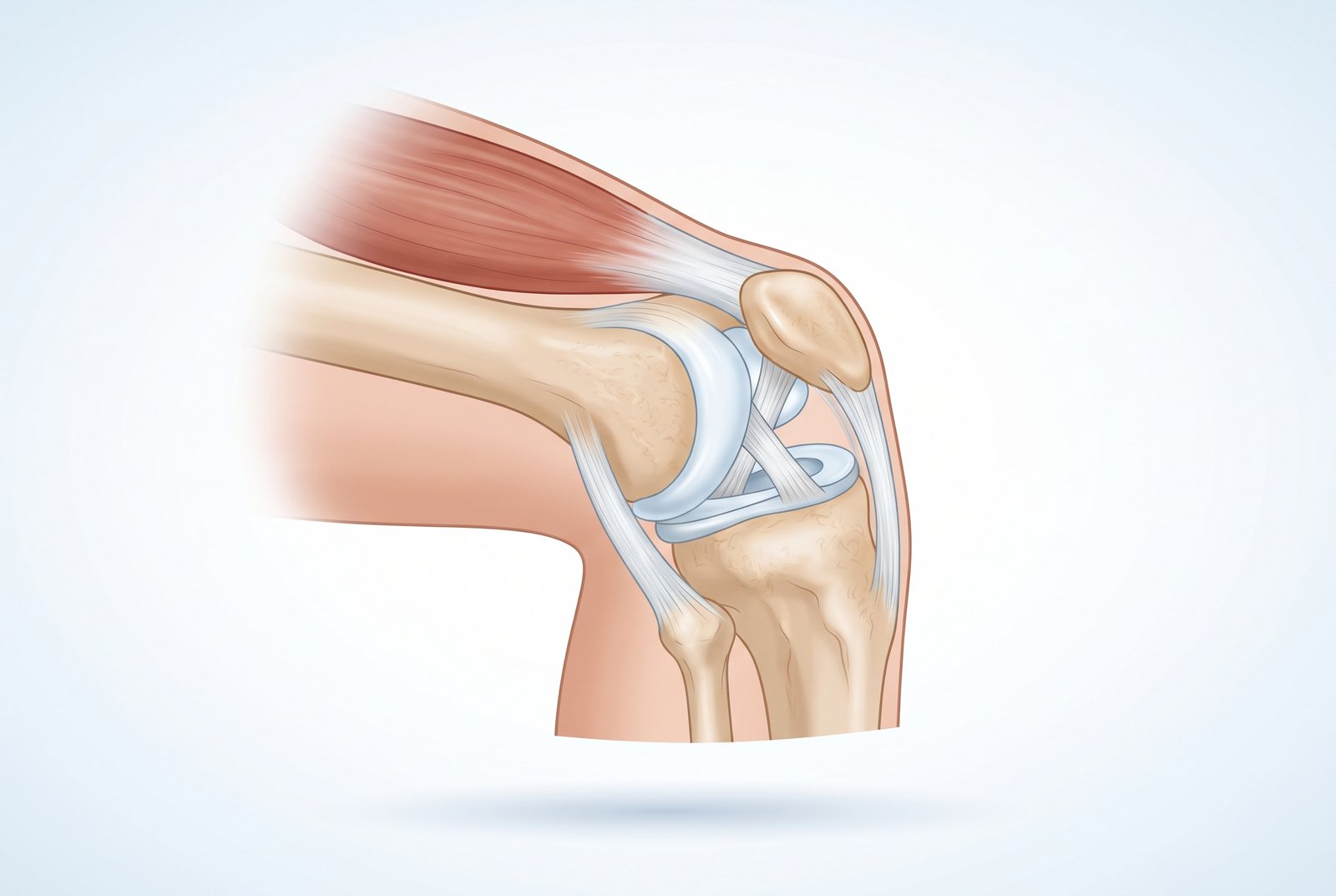
The musculoskeletal system at a glance
Each tissue has a different job, and each can become the source of pain in a different way.
Swipe sideways to see the full table on a phone.
| Tissue | What it does | Common problems |
|---|---|---|
| Bones | Support your body, protect organs and act as levers for movement. | Fractures, bone thinning (osteoporosis) |
| Joints and cartilage | Let bones move smoothly against each other. Cartilage cushions the joint surfaces. | Joint wear and stiffness, osteoarthritis |
| Muscles | Contract to create movement and hold your posture. | Strains, tight muscles and trigger points, overuse pain |
| Tendons | Connect muscle to bone and transmit the force of movement. | Tendon overload (tendinopathy), such as tennis elbow, rotator cuff and plantar fasciitis |
| Ligaments | Connect bone to bone and keep joints stable. | Sprains, such as an ankle sprain |
| Bursae | Small fluid-filled sacs that reduce friction around joints. | Irritation and swelling (bursitis), for example around the hip: hip pain and bursitis |
| Spinal discs | Cushion and space the bones of the spine. | Disc-related back and leg pain, often seen with low back pain and sciatica |
| Nerves | Carry signals between the brain, spine, muscles and skin. | Pinched or irritated nerves, such as carpal tunnel syndrome and sciatica |
What is musculoskeletal physiotherapy?
It is the part of physiotherapy that focuses on the bones, joints, muscles, tendons and ligaments.
A musculoskeletal physiotherapist works out which tissues are involved in your problem and why, then treats them with a mix of hands-on care, exercise and education. The aim is to ease pain, restore movement and rebuild the strength and control you need for the things you want to do.
Physiotherapists in British Columbia are regulated by the College of Physical Therapists of BC, which sets the standards for training and practice. Our physiotherapists are registered with the college.
Find your area of concern
Select a condition to read how we treat it at our Brookswood clinic. Pages for the conditions shown without a link are coming soon.
Head and neck
Neck, jaw, headache and head injury concerns.
- Neck pain
- Whiplash injury
- TMJ dysfunction
- Concussion
- Cervical radiculopathy
- Cervicogenic headaches
- Occipital neuralgia
Upper limb
Shoulder, elbow, wrist and hand problems.
- Frozen shoulder
- Rotator cuff injury
- Tennis elbow
- Carpal tunnel syndrome
- Golfer's elbow
- Shoulder dislocation
- Thoracic outlet syndrome
Back and spine
Low back pain, leg pain and spinal conditions.
- Low back pain
- Sciatica
- Herniated disc
- Spinal stenosis
- Degenerative disc disease
- Scoliosis
- Ankylosing spondylitis
Orthopedic and post-surgical recovery
Rehabilitation after surgery or a fracture.
- Hip replacement recovery
- Knee replacement recovery
- Labral tear and repair
- Post-surgical rehabilitation
- Fracture rehabilitation
Lower limb
Hip, knee, ankle and foot problems.
- Hip pain
- Plantar fasciitis and foot pain
- Ankle sprain
- Knee pain
- ACL injury
- Meniscus injury
- Achilles tendinopathy
- Shin splints
General and whole body
Joint wear, arthritis, strains and sports injuries.
- Osteoarthritis
- Arthritis
- Bursitis
- Rheumatoid arthritis
- Osteoporosis
- Sports injuries
- Muscle strains and sprains
Who we can help
Musculoskeletal problems affect people at every stage of life. These are some of the patients we see most often.
Office and desk workers
Neck, shoulder and back pain from long hours at a screen, and headaches that start in the neck.
Athletes and weekend warriors
Sprains, strains and overuse problems, and a safe plan for returning to sport. See our sports rehabilitation.
People recovering from surgery
Rehabilitation after joint surgery or a fracture, following your surgeon's instructions.
Older adults staying active
Joint stiffness, osteoarthritis and balance concerns, with a plan to keep you moving.
Trades and physical workers
Lifting, repetitive and overhead work injuries, including claims through WorkSafeBC.
People hurt in a car accident
Whiplash and other injuries after a crash, including claims through ICBC.
Our approach to treatment
Three principles guide how we work with every patient.
Individual care
No two people recover the same way. Your plan is built around your findings, your goals and your daily demands, and it changes as you improve.
Evidence-informed
We use the best available research alongside clinical experience and your preferences, and we explain why we recommend each step.
Whole-person approach
We consider your work, sleep, activity level and stress as well as the injured area, because they all affect how you heal.
Why we look beyond the sore spot
Where you feel pain is not always where the problem starts.
Your body moves as a connected chain. When one link is stiff, weak or overloaded, the joints above and below often compensate, and pain can show up somewhere else. This is called referred or compensatory pain. It is one reason treating only the painful spot can bring short-term relief but not a lasting fix. We assess the whole movement, so that treatment can address what is contributing to the problem and not only the symptom.
Hip to knee
The knee is guided by the hip above and the ankle below. Weak hip muscles or a stiff ankle can change how the knee is loaded, so knee pain is not always a knee problem. See hip pain and bursitis.
Neck to arm
Irritation of a nerve in the neck can cause pain, tingling or weakness down the arm that feels like a shoulder or wrist problem. Compare with carpal tunnel syndrome and neck pain.
Back to leg
Pain, numbness or tingling in the leg can come from a nerve that is irritated near the lower back, as in sciatica.
Shoulder blade to wrist
Shoulder and elbow overload often relates to how the shoulder blade and upper back move. See rotator cuff and tennis elbow.
Sprain, strain, tendinopathy and more: what is the difference?
These words are often used loosely. They describe different tissues, and the right treatment depends on which one is involved.
Swipe sideways to see the full table on a phone.
| Term | Tissue involved | What usually causes it | What it often feels like |
|---|---|---|---|
| Sprain | Ligament | A sudden twist or stretch beyond the joint's normal range, such as rolling an ankle. | Pain, swelling, bruising and a joint that feels unstable. |
| Strain | Muscle or tendon | Overstretching or overloading a muscle, such as sprinting or lifting awkwardly. | Sudden sharp pain, tenderness and weakness in the muscle. |
| Tendinopathy | Tendon | Gradual overload of a tendon, often when activity increases quickly. | Pain and stiffness near the tendon, often worse at the start of activity. |
| Bursitis | Bursa | Irritation of the fluid-filled sac near a joint, from pressure or repetitive movement. | Tenderness and aching over the joint, often worse when pressed on or lying on it. |
| Osteoarthritis | Joint cartilage and surrounding tissues | Gradual joint changes over time, influenced by age, past injury and load. | Stiffness after rest, aching with activity and reduced movement. |
| Nerve irritation | Nerve | Pressure or irritation from nearby tissue, such as a disc, a tight space or a swollen tendon sheath. | Tingling, numbness, burning or pain that travels along a limb. |
This is general information, not a diagnosis. Your physiotherapist confirms what is involved after an assessment.
Understanding pain: short-term and persistent
Pain is your nervous system's way of protecting you, and it does not always match the amount of tissue damage.
Short-term (acute) pain
Usually follows a recent injury, such as a sprain or a strain. It tends to settle as the tissue heals over days to weeks. Early advice, gentle movement and a clear plan help you recover and avoid setbacks.
Persistent (chronic) pain
Pain that lasts beyond the usual healing time, often longer than three months. The nervous system can become more sensitive, so pain may continue even when the original tissue has healed. Treatment often combines graded movement, education about pain and hands-on care.
If your pain has lasted a while, you are not doing anything wrong, and it does not mean you are damaged. It does mean the plan may need to look beyond the sore spot.
How an injury heals
Soft tissue healing follows three overlapping stages. The timing varies with the tissue, the severity of the injury, your age and your general health, and tendons and ligaments often take longer than muscle.
Protect and settle
Roughly the first few days to a week
The body responds to injury with inflammation, which is a normal part of healing. The goal is to protect the area, keep pain under control and keep moving within comfort.
Repair
Roughly week 1 to week 3 or more
New tissue forms and begins to knit the injury together. Gentle, progressive movement helps the tissue line up and keeps nearby joints and muscles from stiffening.
Remodel and strengthen
Roughly week 3 to several months
The new tissue matures and gets stronger in response to load. This is the stage where progressive exercise matters most, and where many people stop too early.
Physiotherapy is matched to the stage you are in. Early on, the focus is on protecting the area and keeping you moving. Later, it shifts to active rehabilitation to rebuild strength and control. The timeframes above are general ranges and not a promise for any one person.

How we assess a musculoskeletal problem
A good assessment looks at more than the painful spot.
- History: We ask when it started, what makes it better or worse, previous injuries, your work and sport, and what you want to get back to.
- Observation and posture: We watch how you stand, sit and move, and look for patterns that may be adding load to the painful area.
- Movement and strength testing: We measure how far the joints move and test muscle strength and control, comparing one side with the other.
- Hands-on examination: We check the joints and soft tissues for tenderness, stiffness and tight muscles.
- Special and neurological tests: Where needed, we use specific tests for ligaments, tendons and joints, and screen nerve function such as sensation, reflexes and strength.
- Your plan: We explain what we found in plain language and agree on a plan, including what you can do at home.
Read more about our physiotherapy assessment or complete your intake forms before your visit.
Do I need an X-ray or MRI?
Not always. Many musculoskeletal problems can be assessed and started on a treatment plan without imaging.
X-ray
Shows bones and joint spacing. Useful for suspected fractures and for looking at joint wear.
Ultrasound
Shows tendons, muscles and fluid in real time. Often used for tendon and soft-tissue problems.
MRI
Shows detailed soft tissue, discs and joints. Usually considered when symptoms are severe, not settling or point to a specific structure.
Imaging results often show changes that are common in people with no pain, so a scan is read together with your history and examination. If your physiotherapist thinks you need imaging or a medical opinion, they will explain why and tell you who to see. Bring any reports you already have to your first visit.
How physiotherapy treats musculoskeletal conditions
Treatment is built around your assessment, and may combine several of the approaches below. Treatment depends on your assessment, and not every therapy suits every patient.
Manual therapy
Hands-on techniques to ease stiff joints and tight muscles and improve movement.
Exercise therapy
Targeted strengthening, mobility and balance work. This is the core of most recoveries.
IMS and dry needling
Fine needles used to release tight, painful muscle bands and trigger points.
Shockwave therapy
Acoustic waves used for stubborn tendon and fascia problems where suitable.
Cold laser therapy
Non-invasive light therapy used to support tissue healing where suitable.
Sports rehabilitation
Return-to-sport programs that rebuild strength, speed and confidence.
Education and activity advice
Practical guidance on pacing, ergonomics and what to do at home.
Why exercise is the foundation
Hands-on treatment can ease pain, but lasting recovery usually depends on your tissues getting stronger.
Tendons, muscles and bone respond to gradual, progressive load. Too little and they weaken. Too much, too soon, and they become irritated. A good plan finds the level that challenges you without flaring things up, and builds from there.
That is why we pair treatment with an exercise plan you can follow, and adjust it as you improve. Staying gently active within comfort is generally better for most musculoskeletal problems than long periods of complete rest, although your physiotherapist will advise on what is right for your injury.
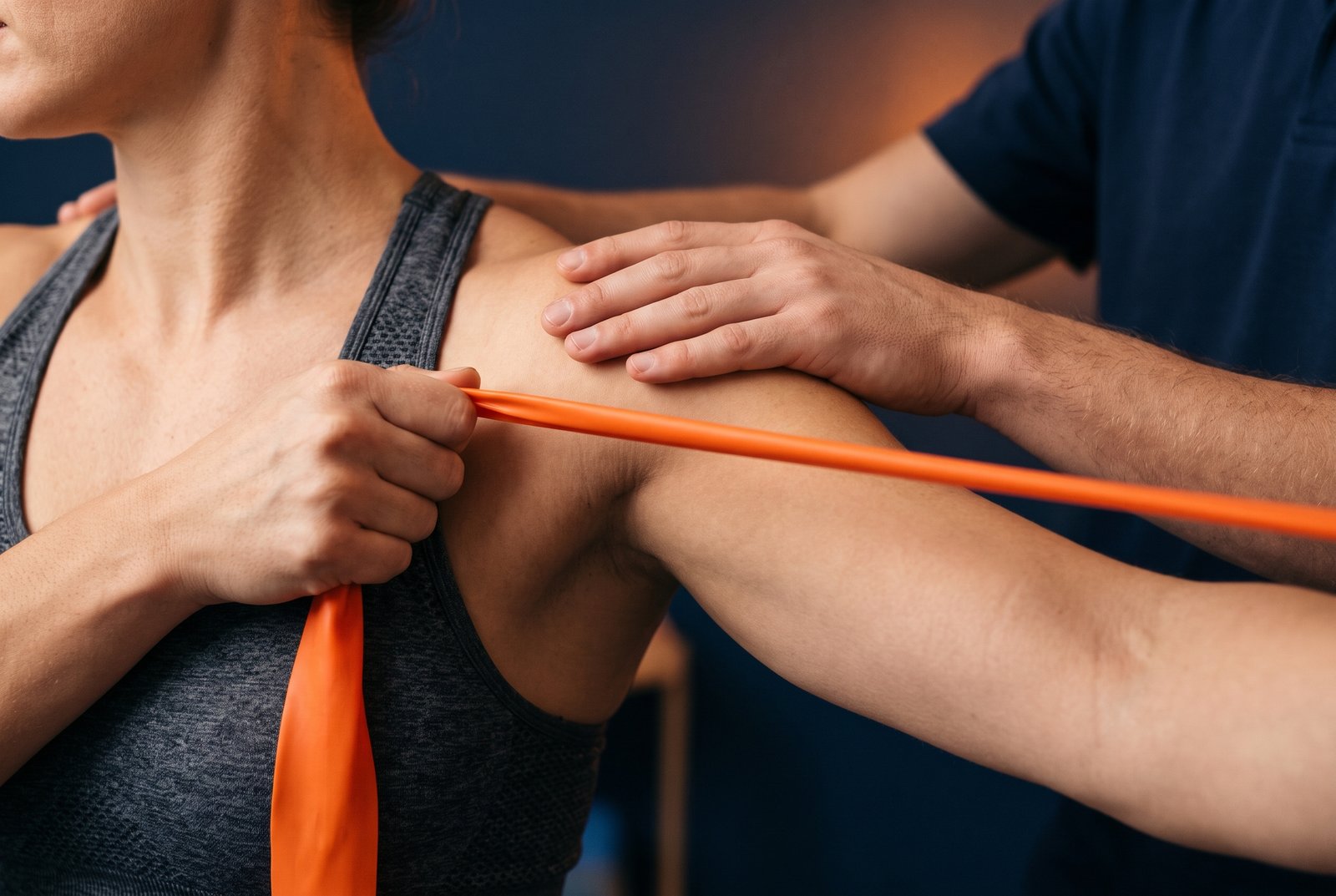
Simple self-care while you wait for your appointment
These general tips suit many everyday aches and strains. They do not replace an assessment.
- Keep moving gently within comfort, and change position often.
- Avoid movements that sharply increase your pain, but do not stop all activity.
- Many people find heat helps stiff, tight muscles and cold helps recent swelling. Use a cloth barrier and limit the time.
- Support your back or neck with a rolled towel or cushion when you sit or sleep.
- Write down when the pain started and what changes it, so you can tell your physiotherapist.
Get checked sooner if
your pain is getting worse, you notice numbness, tingling or weakness, or you have pain at night that does not ease with a change of position. For the warning signs that need a doctor first, see the box under "When to see a physiotherapist" below.
Common myths about musculoskeletal pain
What you have heard may not be the whole story.
Swipe sideways to see the full table on a phone.
| Common belief | What we know |
|---|---|
| Pain always means damage. | Pain level does not always match the amount of tissue damage. Sore, sensitive tissue can hurt a lot without being badly injured, and some injuries hurt little. |
| I should rest until the pain is gone. | For most musculoskeletal problems, gentle movement within comfort helps recovery more than long periods of complete rest. |
| A scan will show exactly what is wrong. | Scans often show changes that are common in people with no pain at all, so results are read together with your history and examination. |
| Stretching alone fixes tight muscles. | Stretching can help, but a muscle that keeps tightening is often weak or overloaded, and strengthening is usually part of the answer. |
| Arthritis means I should stop exercising. | Appropriate exercise is a core part of osteoarthritis care. It helps keep joints moving and the muscles around them strong. |
What raises the risk, and how to lower it
Most musculoskeletal problems build up over time rather than appearing from nowhere.
Common risk factors
- A sudden increase in activity, such as a new sport or a big weekend project.
- Long periods of sitting, or repeating the same movement all day.
- A previous injury that was never fully rehabilitated.
- Weakness or stiffness in the hips, core or shoulders.
- Poorly fitting footwear or an unsuitable workstation.
Ways to lower your risk
- Increase activity gradually and build in rest days.
- Add regular strength and mobility work to your week.
- Take movement breaks if you sit or stand for long periods.
- Warm up before sport and heavy tasks.
- Get niggles checked early, before they become long-term problems.
Quick finder: where does it hurt?
Not sure where your problem fits? Start here.
Swipe sideways to see the full table on a phone.
| Where it hurts | Common conditions | Group above |
|---|---|---|
| Neck and head | Neck pain, whiplash, jaw pain, headaches from the neck | Head and neck ↓ |
| Shoulder, elbow, wrist | Rotator cuff, frozen shoulder, tennis elbow, carpal tunnel | Upper limb ↓ |
| Low back and leg | Low back pain, sciatica, disc problems | Back and spine ↓ |
| Hip, knee, foot | Hip pain, knee pain, plantar fasciitis, ankle sprain | Lower limb ↓ |
| After surgery or a fracture | Joint replacement, labral repair, fracture recovery | Orthopedic and post-surgical ↓ |
| Widespread joint pain | Osteoarthritis, arthritis, strains and sports injuries | General and whole body ↓ |
Still unsure? Book an assessment and your physiotherapist will work out where to start.
When to see a physiotherapist
Book an assessment if any of these sound familiar.
- Pain that has lasted more than a few days.
- Pain that limits your work, sleep or sport.
- Stiffness or weakness that is not improving.
- An injury that keeps coming back.
- Recovery after surgery or a fracture.
- An injury from a car accident or at work.
See a doctor or go to emergency first if you have:
- Sudden severe pain after a fall or accident.
- A suspected broken bone.
- Loss of bladder or bowel control, or numbness in the groin or saddle area.
- New weakness in an arm or leg.
- Fever with back pain, or chest pain.
ICBC and WorkSafeBC physiotherapy
If you were hurt in a crash or at work, we bill ICBC and WorkSafeBC directly for approved treatment.
ICBC
ICBC's Enhanced Care covers physiotherapy for 12 weeks after a crash, with up to 25 treatments pre-approved and no doctor's referral or ICBC approval needed. Bring your claim number and your Personal Health Number.
WorkSafeBC
For a work injury, bring your WorkSafeBC claim number and we will confirm what has been approved.
Extended health
We direct bill many insurers. If yours is not listed on our site, call us at 236-325-0660 and we will check.
Musculoskeletal physiotherapy in Brookswood, Langley
Our clinic is at 4041 200 St, Langley, BC V3A 1K8, at the corner of 200 St and 40 Ave in Brookswood. We see patients one-on-one from Brookswood and across Langley. Free parking is at the back of the clinic, so look for the sign to enter. The clinic is wheelchair accessible.
4041 200 St, Langley, BC V3A 1K8
FAQs
What conditions do you treat at your Langley clinic?
We treat musculoskeletal conditions of the neck, shoulder, elbow, wrist, back, hip, knee, ankle and foot, including sprains, strains, tendon problems, joint pain and arthritis, and we provide rehabilitation after surgery or a fracture. Use the condition links on this page to read more.
Should I rest or keep moving when I am in pain?
For most musculoskeletal problems, staying gently active within comfort is generally better than long periods of complete rest, because movement helps tissues heal and prevents stiffness. Some injuries need a short period of protection first, so ask your physiotherapist what is right for yours.
How long does it take for an injury to heal?
It depends on the tissue, how severe the injury is, your age and your general health. Muscle often heals faster than tendons and ligaments, and some problems take several months to fully settle. Your physiotherapist will give you a realistic outline after your assessment.
Do I need an X-ray or MRI before physiotherapy?
Not usually. Many musculoskeletal problems can be assessed and treated without imaging. If your physiotherapist thinks a scan or a medical opinion is needed, they will explain why and tell you who to see.
Where do I send my X-ray, MRI or other reports?
You can email your reports to info@plusphysio.ca or fax them to 236-325-0600. Please include your name and your appointment date so we can match them to your file. If you prefer, bring a copy to your appointment. Email is not a secure way to send personal health information, so fax or bringing a copy is the safer choice.
How is physiotherapy different from chiropractic care or massage therapy?
Each profession has a different focus. Physiotherapy emphasizes a movement-based assessment, exercise rehabilitation and education alongside hands-on care. You can see a side-by-side comparison on our physiotherapy page.
Do I need a doctor's referral for physiotherapy?
No. You can book directly with a physiotherapist. Some extended health plans ask for a referral before they reimburse you, so check your plan. For ICBC, no referral is needed for the pre-approved treatments in the first 12 weeks after a crash.
How do I know if my pain needs physiotherapy or a doctor?
Many aches, strains and joint problems can be assessed by a physiotherapist. See a doctor or go to emergency first for sudden severe pain after an accident, a suspected broken bone, loss of bladder or bowel control, numbness in the groin area, new weakness in a limb, fever with back pain, or chest pain.
Do you direct bill ICBC and WorkSafeBC?
Yes. We bill ICBC and WorkSafeBC directly for approved treatment, and we direct bill many extended health plans. Bring your claim number and call us if you are unsure what has been approved.
What should I bring to my first visit?
Bring photo ID, your BC Services Card, your extended health card, comfortable clothing and any relevant X-ray, MRI or ultrasound reports. For ICBC or WorkSafeBC, bring your claim number. You can also complete your forms before you arrive using our intake forms page.
Move Better. Feel Better. Live Better.
Book an assessment at Brookswood Plus Physiotherapy, or call 236-325-0660.