Neurological Rehabilitation Physiotherapy in Brookswood, Langley
Neurological rehabilitation physiotherapy helps people recover movement, balance and strength after the brain, spinal cord or nerves have been affected by injury or disease. The work is built around practice: repeating meaningful movements at the right level of challenge, so the nervous system can relearn how to do them.
One-on-one care at 4041 200 St for patients from Brookswood, Fernridge, Campbell Valley and Murrayville.
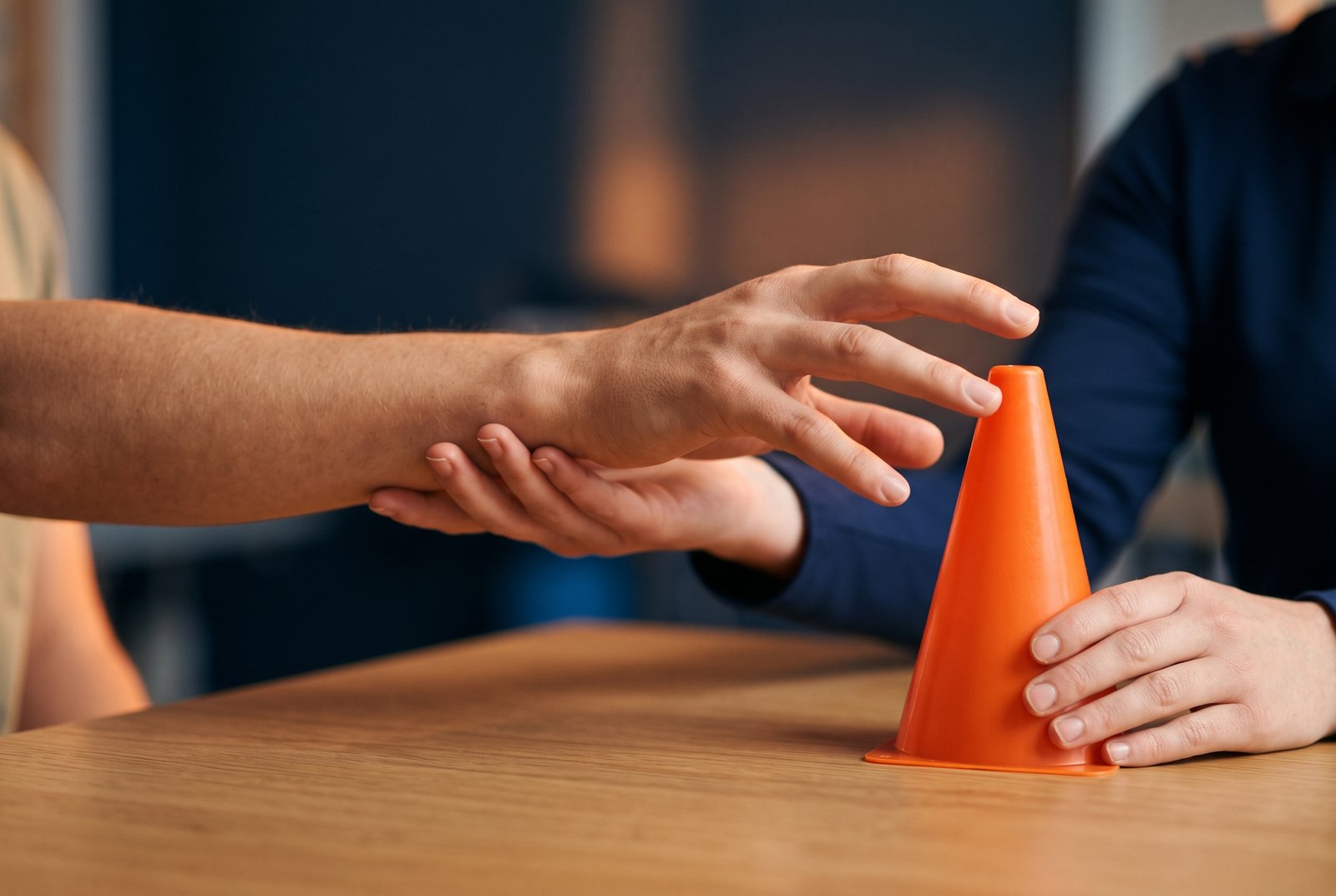
When should you see a neurological physiotherapist?
Consider it when a neurological diagnosis or a nervous system injury has changed how you walk, balance, use your arms or get through your day.
Which neurological conditions do we treat?
We work with conditions that affect the brain, spinal cord and peripheral nerves. Your doctor or specialist makes the diagnosis. Our part is the movement and function side of recovery.
Brain injury and stroke
Sudden injury to the brain that affects movement, balance or coordination.
- Stroke
- Concussion and post-concussion symptoms
- Traumatic and acquired brain injury
- Weakness or poor control on one side
- Balance and walking problems after brain injury
Progressive and long-term conditions
Conditions that change over time, where staying active protects function.
- Parkinson's disease
- Multiple sclerosis
- Peripheral neuropathy
- Other long-term neurological conditions, assessed case by case
Nerve and spinal cord conditions
Damage along the pathway between the brain and the muscles.
- Incomplete spinal cord injury
- Peripheral nerve injury
- Foot drop
- Bell's palsy
- Recovery after Guillain-Barré syndrome
Everyday problems we help with
Whatever the diagnosis, these are the problems people usually want solved:
- Balance problems and falls
- Difficulty walking or climbing stairs
- Muscle weakness and fatigue
- Stiff, tight muscles (spasticity)
- Poor coordination or hand control
- Tremor and slowed movement
- Numbness, tingling and foot drop
- Dizziness and vertigo
- Concussion recovery
- Brain and nerve injuries after a car accident (ICBC)
How does a neurological physiotherapy assessment work?
The first visit is about understanding how your condition affects your daily life, not just what a test score says.
Bring any reports from your doctor, neurologist or hospital, a list of your medications, and any walking aids or braces you use. Family members are welcome to come along.
What does neurological rehabilitation include?
Treatment rests on one idea: the nervous system adapts to what you practise. So we focus on repetition, the right level of challenge, and tasks that matter to you.
Task-specific training
Practising real activities, like standing up, walking, reaching and stairs, again and again, with feedback and slightly harder versions as you improve.
Balance and walking training
Safe balance challenges, plus walking practice that works on step length, speed and stability.
Strength and endurance training
Progressive strengthening and conditioning, paced around fatigue and aimed at the muscles your nervous system struggles to switch on.
Stiffness and muscle tone management
Stretching, positioning and movement strategies that ease tight muscles and keep joints moving.
Vestibular rehabilitation
Exercises that retrain the balance system when dizziness or visual symptoms get in the way.
How does rehabilitation differ for sudden, progressive and nerve-related conditions?
The goals and the timeline change with the type of condition. This is a rough guide. Swipe sideways to see the full table on a phone.
| Sudden injury or event | Progressive condition | Nerve or spinal cord injury | |
|---|---|---|---|
| What it is | A single event that injures the brain, such as a stroke or head injury | A condition that changes over time, such as Parkinson's disease or MS | Damage to nerves or the spinal cord pathway |
| Main goal | Relearn movement and regain independence | Stay active, protect function and adapt as symptoms change | Restore what can recover and make the most of the strength and control you have |
| Main focus | Task practice, walking, balance, arm and hand use | Balance, walking quality, strength, flexibility, fatigue management | Strengthening, foot drop strategies, walking aids, compensation techniques |
| Pace | Often fastest in the first months, with gains still possible later | Ongoing, with regular check-ins and updated programs | Depends on how the nerve recovers, which can take months |
| Best for | People after stroke, concussion or brain injury | People living long term with a diagnosis | People with nerve injury, neuropathy or incomplete spinal cord injury |
What does recovery look like over time?
Neurological recovery is rarely a straight line. Most plans pass through these stages, and we step back whenever you need to.
When should you call 911 or get urgent care?
Some symptoms need emergency care first. Do not wait for a physiotherapy appointment.
- Sudden face drooping, arm or leg weakness, or trouble speaking (possible stroke, call 911)
- Sudden severe headache, sudden loss of vision or sudden confusion
- After a head injury: repeated vomiting, a seizure, growing drowsiness or a headache that keeps getting worse
- New loss of bladder or bowel control, or numbness in the groin or saddle area
- Sudden dizziness with double vision, slurred speech or being unable to walk
If you are unsure, call your doctor or us. If you think it could be a stroke, call 911 right away.
How does billing work?
We bill ICBC, WorkSafeBC and most extended health plans directly for approved claims.
Where is our neurological rehabilitation clinic?
4041 200 St, Langley, BC V3A 1K8
Corner of 200 St and 40 Ave
- One-minute walk to Shoppers Drug Mart Brookswood, Brookswood Park and Brookswood Veterinary Hospital
- Free parking and wheelchair accessible
- Serving Brookswood, Langley, Fernridge, Campbell Valley and Murrayville
Neurological rehabilitation physiotherapy FAQ
What is neurological rehabilitation physiotherapy?
Physiotherapy for movement and balance problems caused by conditions of the brain, spinal cord or nerves. It uses practice, exercise and hands-on techniques to help the nervous system adapt and to keep you as independent and safe as possible.
Do I need a doctor's referral?
No. A doctor's referral is not required to book. Some extended health plans ask for one for reimbursement. If you have reports from your doctor, neurologist or hospital, bring them to your first visit.
How does the brain relearn movement?
The nervous system can reorganize itself, a process called neuroplasticity. It responds best to frequent, focused practice that is challenging but achievable. That is why your plan includes a home program and not just clinic visits.
Can physiotherapy help after a stroke?
Yes. Rehabilitation after a stroke focuses on walking, balance, arm and hand use and everyday tasks. Recovery varies a lot from person to person, so your physiotherapist sets goals based on your assessment and works alongside your medical team.
Can physiotherapy help with Parkinson's disease or multiple sclerosis?
Physiotherapy does not stop these conditions from progressing, but regular, well-designed exercise is an important part of managing them. We work on balance, walking, strength, flexibility and pacing your energy, and we update your program as your symptoms change.
Can physiotherapy help after a concussion?
Often, yes. Most people recover within a few weeks. If dizziness, headaches, neck pain or trouble tolerating exercise linger, a physiotherapist can assess your balance, neck and exercise tolerance and guide a gradual return to activity. After a head injury, see a doctor first.
What is spasticity, and can physiotherapy help?
Spasticity is muscle stiffness caused by damage to the nervous system, often after a stroke, with MS or after spinal cord injury. Stretching, positioning, movement training and strengthening can help manage it. In more severe cases, your doctor may also recommend medication or other medical treatment.
Can physiotherapy reduce my risk of falls?
It can lower the risk. We assess your balance and walking, strengthen the muscles that keep you steady, and practise the situations where you feel unsafe, like turning, stepping over objects or getting up from a chair. We also look at footwear, walking aids and your home setup.
How often will I need to come, and how long is a session?
Sessions usually last 30 to 60 minutes. How often you come depends on your condition and goals, and your physiotherapist sets out a plan after your assessment. Between visits, a short daily home program does a lot of the work.
Can my family come to sessions?
Yes. Family members and caregivers are welcome, and they can learn how to support your exercises safely at home.
Do you work with my other healthcare providers?
Yes. With your permission, we can share information with your doctor, specialist, occupational therapist or speech-language pathologist, so everyone is working toward the same goals.